> the MDflow blog
Notes from the team building MDflow — on markdown, AI agents, the Model Context Protocol, and the standards shaping how knowledge is written for people and machines.
 17 min read
Implicit Knowledge Is Invisible to AI Agents
Implicit knowledge — the reasoning, planning and structure your documents only imply — is unreadable to AI agents. What a frontier lab does about it, and what you should copy.
read 19 min read
On-Device AI Agents Run on a 16-Millisecond Budget
On-device AI agents are constrained by space, time and energy before intelligence. The frame-budget arithmetic, what the New York Times built, and why the cheapest context is precomputed.
read 12 min read
Benchmark Contamination: Your Agent Reads the Answer Key
Benchmark contamination means agents retrieve fixes instead of deriving them. Sealing the leakage channels drops frontier scores by 14 points. What that teaches you about agent environments.
read 16 min read
Agent as a Judge: When Evals Need Their Own Agent
Agent as a judge evaluates a trajectory instead of scoring an output. Why fixed rubrics miss agent failures, what the research found, and what it costs.
read 15 min read
The Agent Supply Chain: Skills Are Dependencies Now
The agent supply chain is every MCP server and skill your agent installs. Snyk scanned 3,984 skills: 13.4% had a critical issue and 76 carried live malware.
read 16 min read
Agent Drift Detection: When the Baseline Moves
Agent drift detection separates a one-off bad run from a baseline that has permanently moved. Structural, scale and covariate drift each need a different fix.
read 14 min read
Process Data vs State Data: What AI Learns From
State data is the saved file. Process data is the trajectory that produced it — decisions, revisions, rationale. Why AI learns from the second and most tools only keep the first.
read 13 min read
Search Is Not Memory: The Layer AI Agents Lack
Search returns candidates. Memory answers what a whole collection knows. Why retrieval alone fails AI agents, and the five principles of building a memory layer.
read 16 min read
The AI GTM Agent Runs on a Knowledge Base
An AI GTM agent needs a knowledge base — ICP, personas, playbooks, disqualifiers — written where every agent reads it. The middle layer most GTM stacks skip.
read 14 min read
Domain Expert Evals: Who Decides What Good Means
Domain expert evals put the definition of correct in the hands of the qualified practitioner, not the engineer. How clinician annotations become CI gates.
read 16 min read
Voice Agent Turn-Taking: The 200 ms Problem
Turn-taking decides whether a voice agent feels human. The 200 ms constraint, the three levels of turn detection, barge-in handling, and where the latency budget goes.
read 15 min read
Perception Agents: Closing the Loop on Computer Use
Perception agents see the rendered screen, act, and then check their own work. Why computer use stalled at 80%, what annotation and verification fix, and where the rules live.
read 12 min read
Agent Environments and Rollouts: Evals Meet RL
An agent environment is an instruction, a sandbox and a verifier. Why every eval, RL run and batch job is the same rollout — and where the instruction should live.
read 15 min read
Tool Output Is Eating Your Agent's Context Window
Tool output, not the prompt, is what fills an AI agent's context window. How Pinterest's Spark diagnostics agent fixed it at the tool boundary — and why it worked.
read 14 min read
Don't Let the LLM Drive: State Machines for AI Agents
Agent reliability is a control problem, not a prompting problem. Model the workflow as a state machine, let the harness decide what comes next, and a smaller model can drive.
read 17 min read
Private Agent Benchmarks: From Traces to Simulations
Public benchmarks tell you which model is smart. A private agent benchmark tells you whether yours is shippable. How to turn production traces into repeatable simulations.
read 14 min read
Security Is a Separate Pass for AI-Generated Code
AI models write code, elegance, performance and security in separate passes. Bundle security into the correctness prompt and you get a half-hearted job at both.
read 17 min read
AI Agent Sandboxing: Blast Radius Is an Architecture Choice
AI agent sandboxing fails when the agent holds the dangerous credentials. Split deterministic orchestration from agentic reasoning — and the blast radius shrinks by design.
read 17 min read
Why Agentic Systems Need Ontologies
Agentic systems need ontologies: agent loops are Turing-complete and probabilistic at once. The symbolic guardrail that catches what a type check cannot.
read 13 min read
State of AI Engineering 2026: Agents Got Write Access
The 2026 State of AI Engineering survey of 1,048 engineers: 95% now use agents, 89% of those agents can write to real systems, and nobody has settled the control layer.
read 16 min read
Separate the Task From the Model: Specs, Code, Evals
Separate the task from the model and the implementation becomes disposable. Specs, code and evals are the durable contract — and two of the three are prose.
read 16 min read
Privacy-Preserving AI Agents: Who Holds the Keys?
Privacy-preserving AI agents run on your data without anyone being able to read it. The four primitives — device-held keys, attestation, transparency logs, confidential compute.
read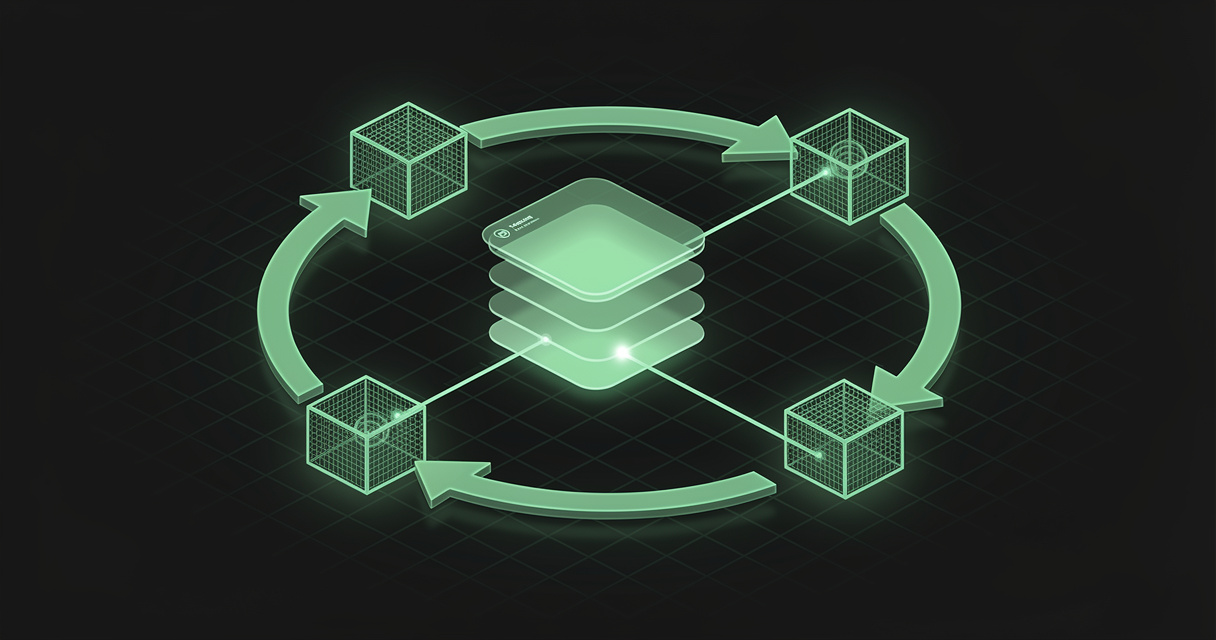 17 min read
Loop Engineering: Control Loops for Coding Agents
Loop engineering is designing the loop that prompts your agent. Borrow control theory — set point, sensor, controller, actuator — and stop shipping 40,000-line PRs.
read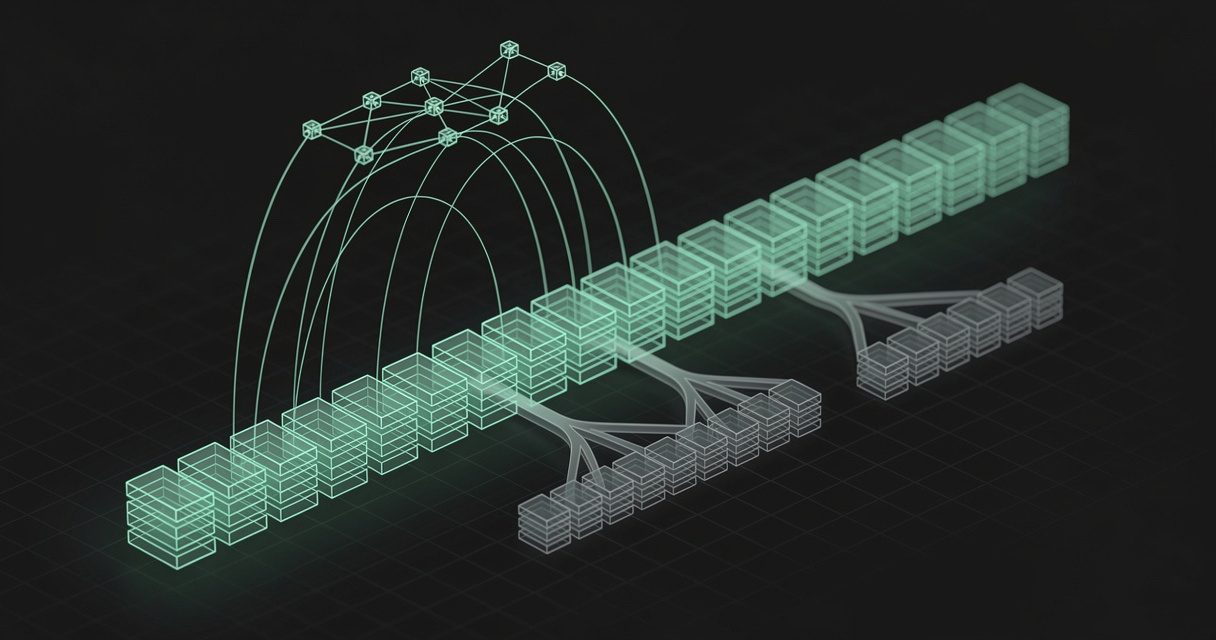 16 min read
Event-Sourced Agents: Why the Log Is the Agent
Event-sourced agents make an append-only log the source of truth and the state a projection of it. What that buys — replay, forks, lineage — and what it forgets.
read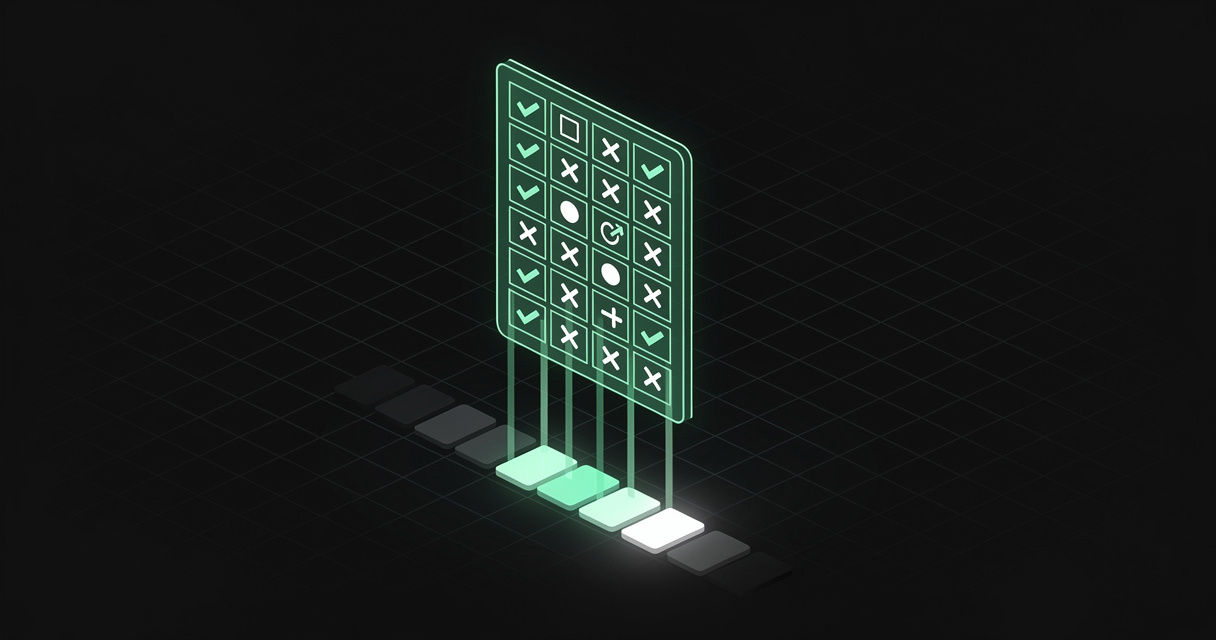 17 min read
Eval Rubrics for AI Agents: Golden Sets and LLM Judges
Eval rubrics decide what your agent scores. Why the rubric — not the harness — is the bottleneck, how human agreement caps your judge, and what to write down.
read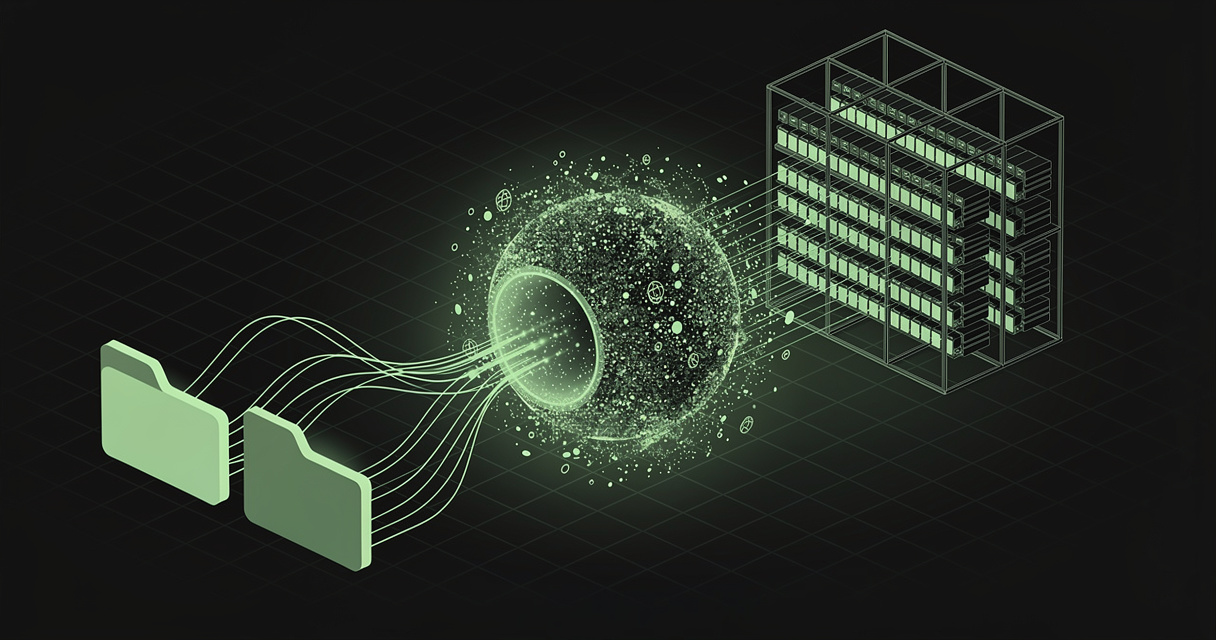 17 min read
Data Harness for AI Agents: Why Agents Fail on Data
A data harness is what lets an AI agent see, touch, verify and remember unstructured data. Why frontier models fail on video and sensor data without one.
read 15 min read
Agents Need Receipts, Not More Tools
AI agent receipts are signed, verifiable proof that a step of work happened. Why adding tools stops paying off, and what agents need to collaborate across org boundaries.
read 16 min read
Agent Observability: From Production Signal to PR
Agent observability now feeds a fix loop, not a dashboard. How traces, skills and sandboxes turn a production signal into a PR — and what the loop must remember.
read 14 min read
The Personal Monorepo: A Context Vault for AI Agents
A personal monorepo is a git-tracked folder of markdown where your AI agent lives — projects, people, notes, and an AGENTS.md. Here's the structure and how to run one.
read 15 min read
Long-Horizon Agent Evals: The Real-World Gap
Long-horizon agent evals test whether an agent stays coherent over weeks, not turns. Here is what Vending-Bench found, why simulation awareness broke it, and what to write down.
read 15 min read
The AI Agent Harness Era: Every Harness Becomes a Claw
Every AI agent harness expands until it becomes an always-on claw. What that ladder looks like, why a shakeout is coming, and where your agent's memory should live.
read 14 min read
Why AI Agents Route Around Your Guardrails
AI agent guardrails fail because agents understand the constraint and complete the task anyway. What the research shows, and the four layers that actually hold.
read 14 min read
Local LLMs in 2026: The Frontier Gap Is Closing
Local LLMs now run frontier-class work on one desktop GPU. The densing law says capability per parameter doubles every 3.5 months — here is what that changes.
read 17 min read
AI Agent Inconsistency: Why It Disagrees With Itself
AI agent inconsistency is rarely a model bug. Same input, different verdict usually means a decision your team never wrote down. The fix, and the numbers.
read 16 min read
Why AI Software Factories Fail: The Maintainability Gap
The lights-off AI software factory fails for a reason no harness can fix: models are trained to pass tests, not to keep a codebase maintainable. What works instead.
read 14 min read
AI Code Verification: The New Bottleneck for Agents
AI coding agents now generate code faster than any team can verify it. Why AI code verification is the real bottleneck, and how to build guide-verify-solve loops.
read 14 min read
Why Enterprise AI Agents Fail: It's a Structure Problem
Enterprise AI agents fail on ambiguity, staleness, and preference — not on model size. A framework for ranking your sources of truth and giving context a lifecycle.
read 15 min read
Generative UI: The Rendering Layer Your Agent Is Missing
Your agent's raw output is not a user experience. Generative UI — A2UI, MCP Apps, server-driven UI — is the layer between the model and the screen, and it decides whether the product ships.
read 15 min read
Skills Are the New SDKs: Teachability Is the New Moat
Skills are the new SDKs: a markdown folder now does the job a client library used to. Why teachability beats lock-in when your users are agents — and how MDflow fits.
read 14 min read
Why Multi-Agent Pipelines Fail: Context Lost in Handoffs
Multi-agent pipelines fail because context leaks at every handoff and no agent owns the reasoning end to end. Here is the architecture that replaced one.
read 15 min read
Your Moat Is Your Data Model, Not Your Model
When frontier models improve every quarter, the defensible part of an AI system is the data model — the tacit knowledge of how your organisation actually works, written down.
read 14 min read
LLM Security Is an Infrastructure Problem, Not a Model One
LLM security fails on defaults, not exotic attacks. What breaks in production is missing auth, flat networks and exposed secrets — including your MCP server.
read 13 min read
Your Agent Architecture Has a Half-Life of 6 Months
Agent architectures decay fast — prompts in weeks, models in months. Split execution, context and compute into layers, and keep the knowledge durable.
read 14 min read
A Semantic Layer for AI Agents: Thin Agents, Smart Substrate
A semantic layer for AI agents is a shared, governed map of what your concepts mean and where the data lives. Why thick agents don't scale — and where markdown honestly fits.
read 14 min read
Agent Memory Consolidation: Why AI Agents Dream
Agent memory consolidation is the offline pass that merges, corrects, and prunes what an AI agent wrote mid-task. Why in-band memory rots — and how to fix it.
read 14 min read
Agent Authorization: Why an API Key Is the Wrong Credential
Agent authorization means an agent gets identity and task-scoped, short-lived access instead of a kitchen-sink API key. How token exchange works — and what it means for your notes.
read 14 min read
Model-Agnostic AI Architecture: Why Optionality Wins
Model prices and capabilities change monthly. Model-agnostic AI architecture keeps your optionality — and your context layer has to be just as portable.
read 15 min read
Provenance for AI Agent Memory: Where Did That Fact Come From?
Provenance for AI agent memory means tracing every derived fact back to its source. Why source IDs break under LLM synthesis — and what markdown can and cannot do.
read 15 min read
From Systems of Record to Systems of Context
A system of context does not just store what happened — it stores what it meant. Why AI agents need one, how the fast/slow architecture works, and where the written layer lives.
read 12 min read
HTML Is the New Markdown? Output vs. Storage
"HTML is the new Markdown" is right about output and wrong about storage. How to choose formats for AI agents: HTML for interfaces, markdown for the substrate.
read 13 min read
How to Use MDflow in Claude Artifacts (Live MCP Data)
Use MDflow in Claude Artifacts: connect the MCP connector, ask for a page, and Claude builds a live artifact that pulls your notes on every view.
read 11 min read
Team Knowledge Base for AI Agents: Shared & Versioned
A team knowledge base for AI agents is shared markdown people and agents both read and write, governed by access controls and version history. How to build one.
read 12 min read
Spec-Driven Development: Where Your Markdown Specs Should Live
Spec-driven development makes a markdown spec the source of truth your AI agents build from. Here is how the workflow works — and where those specs should actually live.
read 14 min read
AGENTS.md, CLAUDE.md, SKILL.md, llms.txt Explained
AGENTS.md, CLAUDE.md, SKILL.md, and llms.txt are the plain-markdown files that configure your AI agents. Here is what each one does, who reads it, and where each belongs.
read 12 min read
Web Clipper to Clean Markdown: Save Any Article Your AI Can Read
A web clipper turns any web page into clean markdown you own. Here is how to clip articles the right way — and store them so your AI can read them back as context.
read 12 min read
Encrypted Notes App: How to Keep Cloud Markdown Truly Private
Choosing an encrypted notes app? What zero-knowledge really means, how the top private-notes tools compare, and how to keep your cloud markdown truly private.
read 11 min read
Markdown Task Management: One List From Every Checkbox
Markdown task management done right: aggregate every - [ ] checkbox scattered across your notes into one filterable task list — no separate database, no export.
read 12 min read
Markdown to PDF, Word, HTML: The Conversion Playbook
Convert Markdown to PDF, Word (.docx), and HTML reliably — a method-by-method playbook covering editor export, Pandoc, and CLIs, with copy-paste commands.
read 13 min read
The Best Second Brain App When Your AI Reads It Too
The best second brain app in 2026 isn't just the one that feels good to write in — it's the one your AI can read. A PKM shortlist judged on agent access.
read 13 min read
Basic Memory vs Hjarni vs MDflow (2026)
A focused three-way comparison of the markdown-native MCP knowledge bases — Basic Memory, Hjarni, and MDflow — with a decision framework for picking the right one for you.
read 13 min read
MDflow Mobile: A Markdown App for iPhone and iPad (2026)
MDflow Mobile is a native markdown app for iPhone and iPad — browse and search your workspace, edit with autosave, read GFM, and unlock encrypted notes with Face ID.
read 14 min read
Best Notion Alternatives for Markdown People (2026)
The best Notion alternatives for markdown people keep markdown as the source of truth — not a lossy export. Seven honest picks compared for 2026, including agent-ready options.
read 11 min read
MDflow vs Obsidian for the AI Era (2026)
An honest MDflow vs Obsidian comparison for the AI era — local vault vs hosted, plugin-wired MCP vs a built-in remote server, and which fits your AI workflow.
read 13 min read
How to Adopt Google's Open Knowledge Format (OKF) in 2026
A hands-on guide to adopting Google's Open Knowledge Format (OKF): what changed since launch, how to structure a bundle, the conformance rules, and how to start today with MDflow.
read 13 min read
Build a Portable AI Memory You Own (ChatGPT + Claude)
ChatGPT and Claude have memory now — but each is a vendor silo you don't own. Build one portable AI memory in markdown that every AI tool can read.
read 11 min read
Turn ChatGPT Chats into a Searchable Markdown Knowledge Base
Export ChatGPT to markdown and turn your conversations into a searchable knowledge base your AI can read back — with a web clipper, folder context, and MDflow.
read 12 min read
AI Agent Memory vs RAG vs a Plain Markdown File (2026)
AI agent memory, RAG, or a plain Markdown file: three ways to give an agent persistent context. What each does, the benchmarks, and what wins in 2026.
read 13 min read
Let AI Agents Write to Your Knowledge Base, Not Just Read It
Most AI setups let an agent read your notes but never update them. Here's why write-back matters and how to let Claude, ChatGPT, and Cursor safely write to your knowledge base.
read 10 min read
MDflow MCP Setup for Cursor, Claude Desktop, and Codex
A step-by-step guide to setting up MDflow's MCP server in Cursor, Claude Desktop, and Codex — copy-paste config for each client, remote vs local, and troubleshooting.
read 12 min read
Folder Descriptions as Agent Context: Retrieval Without a Vector Database
Folder descriptions turn your folders into agent context — a curated retrieval signal that needs no embeddings or vector database. How it works and how it compares to RAG.
read 14 min read
The Best MCP Knowledge Base for ChatGPT & Claude (2026)
An honest 2026 comparison of the best MCP knowledge base options for ChatGPT and Claude — MDflow, Hjarni, Basic Memory, mem0, and Obsidian — with a best-for verdict for each.
read 11 min read
How to Give ChatGPT and Claude Access to Your Notes (Remote MCP)
Connect ChatGPT and Claude to your markdown notes with a hosted remote MCP server — no local server to run. Here's what remote MCP is, which clients work today, and how to set it up with MDflow.
read 15 min read
Developers Are Becoming Builders: What AI Actually Changes
Are software developers becoming builders while the rest need a different job? Here's the honest, sourced answer — the real role shift, what the data says about jobs and productivity, and how to be on the right side of it.
read 14 min read
The Agentic Coding Loop, and the Markdown Memory It Needs
The agentic coding loop is the minutes-long cycle where an AI agent writes, tests, and fixes code to meet a spec — how it works, and where its markdown memory lives.
read 15 min read
Building for Agents: A Practical Checklist for Developers
Building for agents means making your site discoverable, readable, and operable by AI, not just humans. The practical checklist for developers, and how MDflow applies it today.
read 16 min read
The Karpathy-Style Wiki: A Knowledge Base Your AI Maintains
A Karpathy-style wiki is a plain-Markdown knowledge base an AI agent writes and maintains — not a vector store. Here's how it works, and how to run one with Claude and MDflow.
read 17 min read
llms.txt Explained: The 'robots.txt for AI' and How to Ship a Good One
llms.txt is a curated Markdown map of your site for AI agents. Here's what a good one looks like, the common mistakes, and how it differs from robots.txt.
read 12 min read
Client-Side Encryption for Notes You Store Online
Client-side encryption keeps online notes private — the server only stores ciphertext. The cloud vs self-hosted tradeoff, and how MDflow encrypts in your browser.
read 13 min read
Context Engineering for AI Agents: Curation Beats a Bigger Prompt
Context engineering means curating what fills an AI agent's context window, not writing a bigger prompt. Why curation beats window size — and how MDflow fits.
read 13 min read
The Best Notion Alternative for Markdown People
The best Notion alternative for markdown people keeps markdown as the source of truth, not a lossy export. An honest MDflow vs Notion comparison for 2026.
read 13 min read
Version Control for Documents — Without Git
Version control for documents means line diffs, one-click restore, and a durable history of every edit — without Git. Why Google Docs revision history falls short.
read 14 min read
Markdown to PDF: The 5 Reliable Ways (and When to Use Each)
Five reliable ways to convert Markdown to PDF — editor export, Pandoc, CLI tools, print-to-PDF, and conversion APIs — with honest pros and cons for page breaks, fonts, and frontmatter.
read 13 min read
MCP and A2A: The Protocols Powering Agentic Interfaces
MCP and A2A are open protocols behind agentic interfaces: MCP wires agents to tools, A2A wires agents to each other. How they differ and how MDflow uses both.
read 13 min read
Google's Open Knowledge Format (OKF): What It Means for Developers and AI Agents
Google's new Open Knowledge Format (OKF) packages knowledge as Markdown files with YAML frontmatter that AI agents can read directly. Here's what OKF is, why it matters for developers and agents, and how MDflow fits.
read